THE SUPPLEMENT YOU PROBABLY HAVE NOT THOUGHT ABOUT FOR ANXIETY
Oct 21, 2026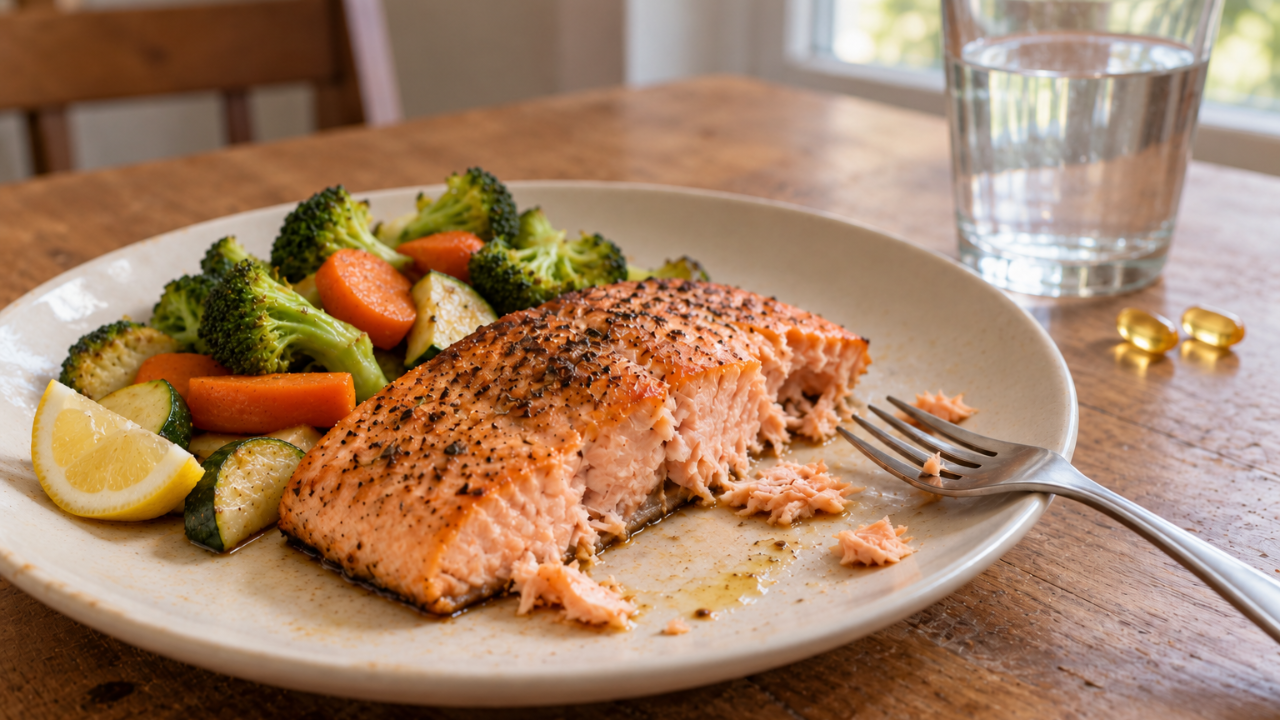
This rich nutrient is probably not the first supplement that comes to mind when you think about anxiety.
Most people know it for joint health, inflammation, heart health, pregnancy, or perhaps as one of those supplements you have heard is generally “good for your brain”. What I think is so interesting, though, is the growing body of research around omega-3s and anxiety.
It is one of those connections that makes so much sense once you start looking at the body as a whole.
Your brain is a physical organ. It is made up of cells, fats, nutrients, chemical messengers and an incredibly complex communication system that responds to everything from your sleep, stress levels and hormones to what you ate for breakfast.
So when anxiety is high, I am always interested in the bigger picture. What is happening with blood sugar? Is someone eating enough? Are they sleeping? Is their gut happy? Are they moving their body and letting some of that stress out? Are they getting enough of the nutrients their brain needs to function well?
Omega-3s are a really important part of that conversation.
Your brain needs the right kind of fat
Around 60% of the brain is made of fat, which is why the type of fat we eat matters far more than we were ever taught.
The two omega-3 fats I am particularly interested in here are EPA and DHA. These are the long-chain omega-3s found in oily fish, seafood and quality fish-oil or algae-oil supplements. DHA is an important structural part of brain-cell membranes, while EPA has a particularly interesting role in the body’s inflammatory pathways.
I want you to picture your brain cells as tiny little houses, all trying to send messages to one another all day long. The walls of those houses need to be flexible enough for messages, nutrients and hormones to move in and out efficiently. Omega-3s are part of what helps to keep those cell membranes fluid and functioning well.
That matters when we are talking about mood, focus, stress resilience and anxiety.
Stress does not just live in our thoughts. It affects our nervous system, our sleep, digestion, hormones, immune system and inflammation. You have probably felt this yourself during a busier or more emotionally intense season: your body feels wired, your sleep gets lighter, your patience gets thinner, you are more reactive, and suddenly even the smallest thing feels like a very big thing.
That is why I find the omega-3 research so fascinating. We are looking at a nutrient that supports the actual physical environment your brain and nervous system are working in.
The research on omega-3s and anxiety is actually really exciting
One of the studies that first made me sit up and pay attention looked at 68 medical students during exam season. Which, if you have ever been through a very intense season of work, deadlines, study, life admin and approximately 47 tabs open in your brain, is a pretty good real-life model for stress.
For 12 weeks, the students took either omega-3s or a placebo. The omega-3 group received 2.5g daily, including just over 2g of EPA. By the end of the trial, they had a 20% reduction in anxiety symptoms compared with the placebo group. Their production of IL-6, an inflammatory marker, was also 14% lower (PMID: 21784145).
I think that is such a beautiful example of how connected the body is. The students were not suddenly living stress-free lives, they were still medical students sitting exams, their environment had not magically changed. What had changed was one part of the nutritional foundation supporting how their bodies were responding to stress.
A more recent 2024 systematic review and dose-response meta-analysis then pulled together 23 randomised controlled trials, involving 2,189 adults. The researchers found that omega-3 supplementation significantly improved anxiety symptoms, with the greatest improvements appearing around 2g daily (PMID: 38890670).
This is a detail that really matters in practice, because plenty of people are taking a standard fish-oil capsule with a tiny amount of EPA and DHA in it and expecting a therapeutic effect. The big number on the front of the bottle can be a little misleading too. A label might say “1,000mg fish oil”, but when you turn it around and look at the actual EPA and DHA content, it may only provide a few hundred milligrams.
The studies showing the strongest changes in anxiety have generally used more meaningful doses, particularly formulas with a decent amount of EPA. So as always, this is a reminder to really investigate and be careful with your supplements!
Also why I suggest you start with food first…
Food is always where I love to begin because it gives you far more than one isolated nutrient.
Oily fish is one of the most beautiful ways to naturally increase EPA and DHA. Salmon, sardines, mackerel, herring, anchovies and trout are all great options. Fresh salmon is amazing, but tinned salmon and sardines are also such an easy, budget-friendly way to get more omega-3s into your week.
You could do eggs with smoked salmon for breakfast, add tinned salmon to a nourishing lunch bowl, make a really good sardine toast on gluten-free sourdough, or keep some salmon portions in the freezer for an easy dinner with roast vegetables and a big salad.
If seafood feels like a hard no for you, I get it. Walnuts, chia seeds, flaxseed and hemp seeds are all gorgeous whole-food sources of a plant-based omega-3 called ALA. I still absolutely encourage those foods because they come with fibre, minerals and polyphenols too. The only little nutrition nerd note here is that the body has to convert ALA into EPA and DHA, and that conversion is very limited for most people.
This is why eating chia pudding every morning is not quite the same thing as getting EPA and DHA from oily fish, fish oil or algae oil.
Why a supplement can be really helpful
Even with the best intentions, many people are simply not eating oily fish regularly enough to get the amount of omega-3s used in the research.
That is where a good-quality supplement can be incredibly helpful. It gives you a consistent way to top up EPA and DHA, particularly during seasons where anxiety feels higher, stress is greater, or you are trying to create a more solid foundation for your mental health.
When you are looking at a fish-oil supplement, flip it over and check the EPA and DHA amounts rather than only looking at the total fish-oil number on the front. For anxiety support, I would be looking for a formula that provides a meaningful amount of EPA, with DHA alongside it, rather than a low-dose capsule that is mostly filler oil.
For anyone who is vegan or vegetarian, algae oil is the best option to look for. It gives you DHA and, depending on the formula, EPA too, without relying on the limited conversion from plant-based ALA.
If you are taking blood-thinning medication, are pregnant or breastfeeding, have surgery coming up, or are managing a health condition, it is always worth checking in with your doctor or practitioner about the right dose for you.
The quality part matters more than most people realise
There is one thing I really want you to be mindful of if you are going down the fish-oil route: not all omega-3 supplements are created equal.
EPA and DHA are delicate fats. They are easily damaged by heat, light and oxygen, which means fish oil can oxidise over time. You will hear this called rancidity, and it is not the same thing as taking fresh, well-made omega-3 oil.
Studies testing fish-oil supplements in New Zealand, Australia, North America and Europe have found huge variation in oxidation levels between brands and batches. Some products have exceeded voluntary freshness standards, while others have been beautifully within them. That is why I do not love the idea of simply grabbing the cheapest fish oil off the supermarket shelf and hoping for the best (PMID: 25604397; PMID: 37712532).
The whole reason we are using omega-3s is to support the brain, nervous system and healthy inflammatory pathways. Quality is part of the point.
I also think it is important to remember that “legal” and “optimal” are not always the same thing. Fish oil can still meet a regulatory requirement without giving you much insight into the freshness of the oil in your actual bottle, or how thoroughly it has been tested for environmental contaminants such as mercury, PCBs and dioxins.
When I am choosing a fish oil, I want to see proper third-party testing for purity, potency and oxidation, ideally with a batch-specific Certificate of Analysis rather than a vague quality claim on the label.
This is why Nordic Naturals is my go-to. They are widely available worldwide, test their products through certified independent laboratories and make their Certificates of Analysis available by lot number, so you can see the testing for the bottle in your hands. You are getting the EPA and DHA you are paying for, in an oil that has been properly handled and tested for both freshness and contaminants.
You can have the best dose in the world, but I would rather you take a quality-tested omega-3 consistently than a bargain bottle of fish oil that has been sitting in a hot warehouse for who knows how long.
The bigger picture
I love omega-3s because they are such a tangible example of how deeply connected nutrition and mental health really are.
We cannot separate the brain from the body. The thoughts you are having, the way you respond to stress, how steady you feel emotionally, whether you can switch off at night, how resilient you feel when life gets busy: all of it is happening inside a body that needs to be nourished.
Sometimes the most supportive thing you can do for your mental health looks like a deep therapy session, a conversation with someone you love, a walk in the sun, a dance class or a really good sleep.
Sometimes it also looks like eating salmon for dinner, adding sardines to your lunch, or finally taking the fish oil that has been sitting in your cupboard.
That is the beauty of functional medicine. We get to look at the whole person, understand what their body needs, and use every tool available to help them feel more like themselves.
References
- Kiecolt-Glaser, J. K., Belury, M. A., Andridge, R., Malarkey, W. B., & Glaser, R. (2011). Omega-3 supplementation lowers inflammation and anxiety in medical students: A randomised controlled trial. Brain, Behavior, and Immunity, 25(8), 1725–1734. PMID: 21784145
- Bafkar, N., Zeraattalab-Motlagh, S., Jayedi, A., & Shab-Bidar, S. (2024). Efficacy and safety of omega-3 fatty acids supplementation for anxiety symptoms: A systematic review and dose-response meta-analysis of randomised controlled trials. BMC Psychiatry, 24, 455. PMID: 38890670
- Su, K.-P., Tseng, P.-T., Lin, P.-Y., Okubo, R., Chen, T.-Y., Chen, Y.-W., & Matsuoka, Y. J. (2018). Association of use of omega-3 polyunsaturated fatty acids with changes in severity of anxiety symptoms: A systematic review and meta-analysis. JAMA Network Open, 1(5), e182327. PMID: 30646157
- Albert, B. B., Derraik, J. G. B., Cameron-Smith, D., Hofman, P. L., & Cutfield, W. S. (2015). Fish oil supplements in New Zealand are highly oxidised and do not meet label content of n-3 PUFA. Scientific Reports, 5, 7928. PMID: 25604397.
- Albert, B. B., Bissell, S., Cameron-Smith, D., et al. (2017). Omega-3 long-chain polyunsaturated fatty acid content and oxidation state of fish oil supplements in New Zealand. Scientific Reports, 7, 1488. PMID: 28469193.
- Lubin, G., et al. (2023). A multi-year rancidity analysis of 72 marine and microalgal oil omega-3 supplements. Nutrients, 15(18), 3988. PMID: 37712532.
Join the SHWellness Newsletter
Stay connected in the SHW Community with all the latest wellness tips, hacks and updates delivered right to your inbox each week!
We hate SPAM. We will never sell your information, for any reason.
