HOW TO GET RESULTS WITHOUT LIVING IN THE GYM (why training more isn’t changing your body… and what actually will)
Apr 16, 2026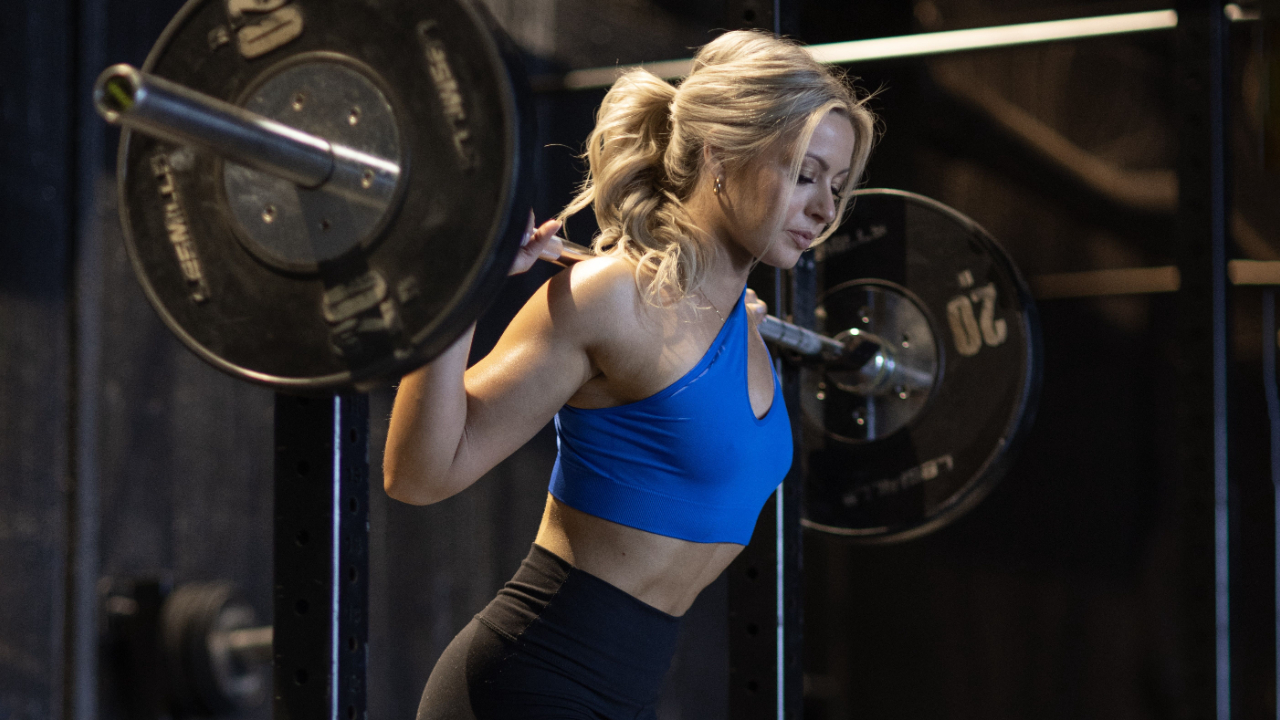
I hear this all the time from women, and if I’m honest, it’s usually said with a mix of frustration and quiet self-doubt:
“I’m training more than ever… so why does it feel like nothing is changing?”
Because on paper, you’re doing everything “right.” You’re showing up, you’re getting the sessions in, you’re adding in extra cardio, and you’re trying to be consistent. From the outside, it looks like effort shouldn’t be the issue. And yet, your body doesn’t seem to be reflecting any of it.
I’ve been there too. Showing up, doing more, trying to tick every box, and still feeling like something just wasn’t landing. And that’s the part that starts to get to you, because when the effort is there but the results aren’t, it’s very easy to turn that back on yourself and assume you’re the problem.
So naturally, you try to do more. More sessions, more intensity, more discipline, more control. Because that’s what we’ve been taught, right? That results are simply a reflection of how hard you’re willing to work.
But what if doing more isn’t the answer?
What if the very thing you think is going to get you results is actually the thing keeping you stuck?
The Real Reason You’re Not Seeing Results
What I see time and time again is women increasing their training load without increasing their body’s ability to actually handle and adapt to that load. Training volume goes up, cardio increases, intensity stays high across the board… but the body doesn’t respond the way you expect it to. Instead, it starts to push back.
Energy dips. Recovery slows. You might feel more inflamed, more fatigued, or like your body composition is shifting in the opposite direction of what you’re working towards. There’s this subtle but frustrating sense that you’re working harder for less return.
And this is where things need to shift, because this isn’t a discipline problem. It’s not a motivation problem. It’s a mismatch between what you’re asking your body to do and what it’s actually supported to do.
Why “Healthy” Feels So Hard to Keep Up With
There’s also a bigger piece at play here, which is the version of “being healthy” that so many women feel like they need to live up to. The one that involves hours in the gym, perfectly structured meals, constant motivation, and a routine that doesn’t account for real life.
And if you’ve ever felt like you’re trying to keep up with that version but never quite getting there, it’s not because you’re failing. It’s because that standard was never built for sustainability.
You don’t need more on your plate. You need what you’re already doing to actually work.
And when it comes to training, that usually means simplifying things and doing them properly, rather than constantly adding more.
Movement Is Powerful… But Intention Is What Makes It Effective
Because movement in itself is powerful, but it’s the intention behind it that makes it effective.
We all know that movement is “good for us,” but that surface-level understanding doesn’t actually create results. When you zoom out, movement is influencing far more than just calorie burn. It’s impacting circulation, brain function, metabolic health, hormonal balance… it’s literally supporting your body at a cellular level.
Which is why two people can both be “working out” consistently, and only one of them is actually seeing change.
It’s not just about moving. It’s about how you move, how you train, and whether your body is in a position to actually adapt to what you’re asking of it.
You Don’t Need More Time, You Need Better Use of It
I love training, but I have no desire to spend hours in the gym, and most of the women I work with don’t have that time anyway. What they do have is 30-45 minutes, maybe an hour on a good day, and that is more than enough when it’s used with intention.
This is where I see the biggest shift happen. Not when someone suddenly finds more time, but when they start using the time they already have in a way that actually supports their goals. This is how you can start to shift things…
If You’re Doing Cardio and Weights… This Matters
A really simple example of this is how workouts are structured when you’re doing both cardio and weights. One of the most common mistakes I see is doing cardio first and leaving strength training until the end. It seems harmless, but it completely changes the quality of your session.
By the time you get to your weights, you’re already fatigued. Your energy is lower, your focus is lower, and you’re not able to train with the level of intensity or intention that actually creates change. If your goal is to build strength, support your metabolism, and create that lean, defined look, your strength training needs your best energy.
It deserves to come first.
And the truth is, for most women, cardio isn’t even the missing piece. Daily movement, getting your steps in, walking outside, having that baseline level of activity, is often far more supportive long-term than forcing yourself through extra cardio sessions that don’t actually align with your goals. Cardiovascular fitness absolutely has its place, but it doesn’t need to come at the expense of your strength work or your recovery.
Where Strength Training Goes Wrong
Where I see the biggest gap, though, is in how women are actually strength training.
Because a lot of workouts feel productive, but they’re not actually effective.
There’s often a focus on smaller, isolated movements, lighter weights, and a lot of effort going into exercises that don’t really challenge the body in a meaningful way. And the body doesn’t change just because something feels hard. It changes when it’s given a reason to.
This is why I always bring the focus back to bigger, more integrated movements. The ones that use multiple muscle groups, require coordination, and actually ask something of your body. Squats, deadlifts, lunges, presses, rows, push-ups. These are the movements that create change because they place a demand on the system as a whole.
And if you’ve only got a short window to train, this matters even more. You don’t have time to waste on things that feel busy but don’t actually move the needle. You can’t spot reduce, and you don’t need to spend your session isolating smaller muscle groups when you could be training your body in a way that is far more efficient and far more effective.
Let’s Clear Up the “Bulky” Fear
There’s also the fear around lifting heavier weights, which comes up all the time. The idea that lifting heavier will make you bulky. And I understand where that comes from, but it’s not how the female body works.
Building noticeable muscle mass takes a very specific combination of training, nutrition, and time. It doesn’t happen by accident. What does happen when you lift weights consistently, is that your body becomes more defined, your metabolism improves, and you feel stronger and more capable in yourself.
That “toned” look so many women are chasing is actually the result of building muscle, not avoiding it.
And lifting “heavy” is always relative. It simply means challenging yourself at your current level. Because if nothing is being challenged, nothing is going to change.
You Can’t Out-Train Poor Fueling
When strength training is done properly, with good form, control, and awareness, it becomes incredibly supportive. It strengthens your joints, improves your posture, and helps prevent injury rather than cause it. You’re not just training for aesthetics, you’re building a body that functions well.
But none of this works in isolation from how you’re fuelling your body.
This is the piece that so many women overlook, especially when life is busy or when there’s still that underlying belief that eating less will somehow speed things up. If you’re going into your workouts under-fuelled, your body is already at a disadvantage.
You don’t need a full meal, but you do need something.
Because without it, your body isn’t tapping into fat stores in some magical way. It’s far more likely to start breaking down muscle tissue to meet the demand, which is the exact opposite of what we want. Eat before you train ladies… PLEASE!
After training, it’s not just about protein either. Protein supports repair, but carbohydrates are what help replenish what you’ve used and support recovery. Both matter if you actually want your body to adapt and change.
What Actually Makes This Sustainable
And before any of the strategy, there’s one thing that matters more than anything else.
It has to feel sustainable.
You have to enjoy how you’re moving your body, or at the very least feel good doing it. Because if you don’t, you won’t keep doing it. And consistency will always win.
You don’t need to overhaul your life. You don’t need to be in the gym for hours. You don’t need a perfect routine.
What works is a simple, intentional approach that fits into your actual day-to-day life and supports your body instead of constantly fighting against it.
Because when that clicks, everything else starts to shift. Your energy, your strength, your confidence, and the way you feel in your body.
And that’s the goal.
Sheree xo
P.S. If you want your results to reflect your effort and feeling the call to have a little guidance when it comes to your strength training in a way that supports your female body, we have something very special coming soon… click here to join the waitlist and be the first to know!
Join the SHWellness Newsletter
Stay connected in the SHW Community with all the latest wellness tips, hacks and updates delivered right to your inbox each week!
We hate SPAM. We will never sell your information, for any reason.
